
Silver Hallmarks for Dummies: Determine the Age, Silver Content, and Value of Your Antique Silver Items

Antique silver pieces often carry a story hidden in tiny marks stamped on their surface. These silver antique hallmarks are the key to unlocking the age, silver content, and even the value of your treasured items. If you have inherited or collected silverware, jewelry, or decorative objects, knowing how to read these hallmarks can save you time and money, and deepen your appreciation of your collection.
This guide will walk you through the basics of identifying hallmarks, using online resources to decode them, and understanding what they reveal about your silver items.

Close-up of antique silver spoon hallmarks
What Are Silver Hallmarks and Why Do They Matter?
Hallmarks are official marks stamped on silver objects to certify their purity, origin, and sometimes the maker. They serve as a guarantee of quality and authenticity. Over centuries, different countries developed their own hallmarking systems, which means the marks can tell you where and when the piece was made.
Knowing how to tell age of silver through hallmarks helps collectors avoid fakes and understand the historical context of their items. It also plays a crucial role in determining the value of silver antiques.
Common Types of Hallmarks
Maker’s Mark: Identifies the silversmith or company that made the item.
Assay Office Mark: Shows where the silver was tested and marked.
Date Letter: A letter or symbol that corresponds to a specific year.
Standard Mark: Indicates the purity of the silver, such as sterling silver hallmarks.
Duty Mark: Historical tax marks, less common today.
How to Identify the Age of Silver Using Hallmarks
The date letter is the most direct way to find the age of your silver. Each assay office uses a unique font and shape for the date letter, which changes annually. For example, in London, a lowercase “a” in a specific font might mean 1903, while in Edinburgh, the same letter could indicate a different year.
Steps to Determine Age
Locate the Date Letter: Look carefully for a letter stamped on the item.
Identify the Assay Office: Find the symbol representing the city or office.
Use Online Databases: Websites like the Online Encyclopedia of Silver Marks or national assay office sites provide charts to match letters and symbols to years.
Cross-Reference Maker’s Mark: Confirm the date by checking the maker’s active years.
Example
A silver teapot with a lion passant (English sterling mark), a leopard’s head (London assay office), and a date letter “k” in a shield shape can be dated to 1911 using hallmark charts.
Understanding Silver Content Through Hallmarks
The purity of silver is crucial for both collectors and buyers. Sterling silver is the most common standard, defined as 92.5% pure silver. This is often marked with:
The number 925
A lion passant (in British silver)
The word “Sterling” (more common in American silver)
Other silver standards include:
800 or 835 silver, common in European countries, meaning 80% or 83.5% silver content.
Coin silver (90% silver), used in the US historically.
How to Tell Silver Content
Look for the standard mark or purity number.
Check the assay office mark to understand the country’s hallmarking system.
Use online guides to interpret less common marks.
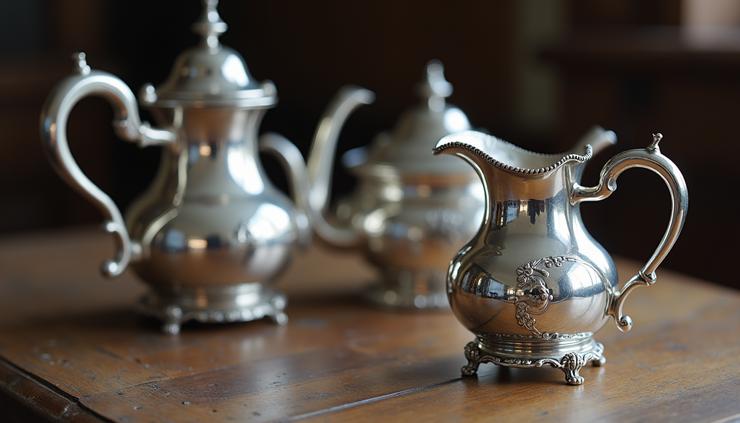
Antique silver tea set with hallmarks on the base
Using the Internet to Find Makers, Ages, and Values
The internet is a powerful tool for decoding hallmarks and estimating the value of silver antiques. Here are some practical tips:
Finding Makers
Search hallmark databases by maker’s mark symbols.
Use forums and collector groups for rare or unusual marks.
Reference books digitized online can provide detailed maker histories.
Dating Items
Use official assay office websites for date letter charts.
Compare your item’s marks with verified examples in online collections.
Estimating Value
Check auction results for similar items.
Use price guides from reputable antique dealers.
Consider condition, rarity, and provenance alongside hallmarks.
Recommended Online Resources
925-1000.com: Comprehensive silver hallmark database.
The Online Encyclopedia of Silver Marks, Hallmarks & Makers' Marks: Covers multiple countries.
National assay office websites (e.g., London Assay Office).
Tips for Collectors and Sellers
Always photograph hallmarks clearly before cleaning or polishing.
Avoid harsh chemicals that can damage marks.
Consult experts for rare or valuable pieces.
Keep records of hallmark research for provenance.

Antique silver jewelry box with hallmark stamps inside the lid


Comments